SMEs and Marketing Consultants: Collaborating for Sustainable Impact
Discover how a marketing consultant can support SMEs in their corporate social responsibility (CSR) journey, aligning sustainable strategies with business objectives to create a positive impact on both the environment and society
MARKETING
LYDIE GOYENETCHE
10/19/20252 min read

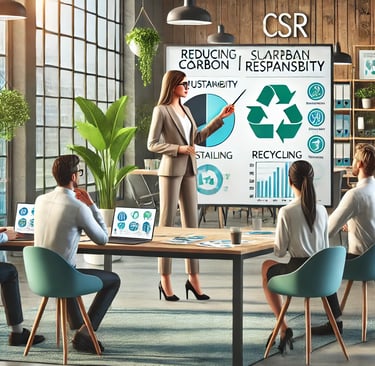
The Role of Marketing Consultants in Driving CSR Initiatives
In a world where businesses face growing expectations regarding sustainability and social responsibility, the role of marketing consultants has become indispensable. These professionals, equipped with both strategic and operational expertise, provide valuable guidance for companies seeking to integrate CSR into their core operations. Their support goes far beyond minor adjustments, aiming instead to transform internal practices, enhance external perception, and address contemporary environmental, social, and economic challenges.
By examining concrete examples of companies that have successfully collaborated with marketing consultants on their CSR initiatives, we can better understand the significance and tangible impact of this support.
Flunch: A Drastic Reduction in Plastic Waste
Flunch serves as a compelling example of how a company can structure itself to adopt more sustainable practices, potentially with the support of internal or external expertise. Faced with heavy reliance on single-use plastics, Flunch recognized an opportunity to reduce its environmental footprint.
This assessment led to the creation of a step-by-step action plan, including the elimination of plastic straws and cutlery in favor of biodegradable alternatives. The results were impressive: 52 tons of plastic eliminated in just one year, significantly improving the brand’s reputation among eco-conscious consumers. This example highlights the value of a structured, collaborative approach in achieving CSR goals.
Monoprix: Moving from Paper Catalogs to a Digital-First Strategy
Monoprix took both an environmental and economic step by ending the distribution of its printed catalogs. The retailer, which had been circulating thousands of paper leaflets each year, decided to focus on digital formats instead. This transition significantly reduced printing costs and environmental impact. According to Monoprix, the digital catalog has an environmental footprint four times lower than its paper equivalent. The company developed a strategy focused on mobile-first solutions, including promotional offers accessible via a dedicated mobile app and targeted email campaigns. This transition eliminated the need for paper catalogs while ensuring customers could still access promotional content efficiently.
To facilitate adoption, the initiative was accompanied by team training, ensuring a smooth shift toward digital practices. The benefits were substantial: 2,400 tons of paper saved annually, a significant reduction in operational costs, and an enhanced brand image among an increasingly eco-conscious consumer base.
Franprix: Turning Cigarette Waste into a Sustainable Solution
Franprix has taken several visible steps to reduce urban pollution and promote more responsible habits among city dwellers. In partnership with local authorities and environmental organizations, the retailer has supported initiatives aimed at keeping areas around its stores cleaner. These include awareness campaigns and participation in urban waste collection efforts, particularly concerning cigarette butts — a major source of litter in French cities. Through these actions, Franprix reinforces its image as a neighborhood brand committed to environmental responsibility and civic engagement.
The project not only garnered positive feedback from customers, municipalities, and local residents but also strengthened Franprix’s community ties and lowered street-cleaning costs. This case illustrates how CSR efforts, no matter how small, can generate both environmental and economic benefits— especially when such initiatives are articulated through clear, multilingual CSR content adapted to international stakeholders.
Conclusion: Winning Strategies for a Sustainable Future
These case studies demonstrate that the role of marketing in CSR extends far beyond technical adjustments or isolated initiatives. The expertise enable businesses to align sustainability goals with broader business objectives, ensuring that CSR efforts are not just symbolic gestures but integrated, impactful transformations.
Marketing consultants bring analytical insight, strategic vision, and stakeholder engagement skills, making them key players in the corporate sustainability movement. Their ability to bridge the gap between business needs and responsible practices empowers companies to thrive while respecting both society and the environment.
Ultimately, the success of these initiatives hinges on a shared vision and precise execution—two qualities that marketing consultants excel at delivering.
EUSKAL CONSEIL
9 rue Iguzki alde
64310 ST PEE SUR NIVELLE
07 82 50 57 66
euskalconseil@gmail.com
Mentions légales: Métiers du Conseil Hiscox HSXIN320063010
CGV & Mentions légales
Ce site utilise uniquement Plausible Analytics, un outil de mesure d’audience respectueux de la vie privée. Aucune donnée personnelle n’est collectée, aucun cookie n’est utilisé.